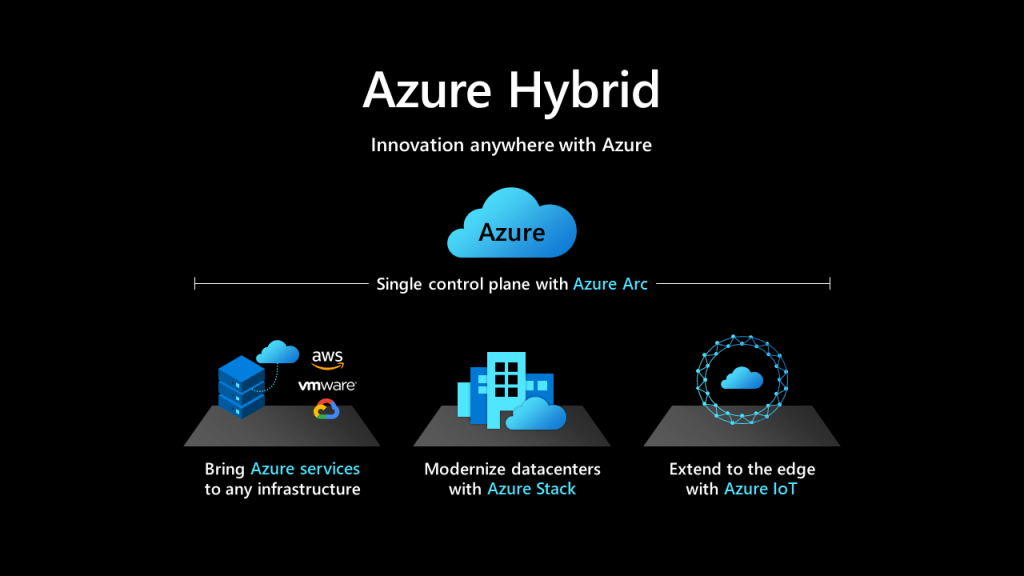
As businesses grow, many adopt a mix of on-premises data centers, cloud services, and even multiple cloud providers. This hybrid and multi-cloud approach provides flexibility, scalability, and resilience. However, it can also introduce complexity in managing resources. Microsoft Azure offers powerful tools to simplify managing hybrid and multi-cloud environments.
In this blog, I’ll cover:
- What is Hybrid Cloud and Multi-Cloud?
- How Azure Arc enables hybrid management.
- Designing multi-cloud solutions with Azure.
- Building hybrid cloud backup and disaster recovery strategies.
- Best practices for success.
1. What is Hybrid Cloud and Multi-Cloud?
Hybrid Cloud
Hybrid cloud combines on-premises infrastructure (like servers) with public cloud services. For example, you might host critical data on your servers while running scalable applications on Azure.
Multi-Cloud
Multi-cloud refers to using services from multiple cloud providers, such as Azure, AWS, or Google Cloud, to optimize performance and avoid vendor lock-in.
2. Integrating On-Premises Resources with Azure Arc
Azure Arc extends Azure management and governance to on-premises environments and other cloud platforms.
Key Features of Azure Arc:
• Unified Management: Monitor and manage resources across your hybrid environment using the Azure portal.
• Azure Services Anywhere: Deploy Azure data services, like SQL Managed Instance, on your on-premises infrastructure.
• Security & Compliance: Enforce consistent policies and security across all resources using Azure Policy and RBAC.
Use Case:
Imagine you have multiple on-premises servers running critical workloads. Azure Arc lets you manage them alongside your Azure resources, ensuring consistent updates and security policies.
3. Designing Multi-Cloud Solutions with Azure
Why Choose Multi-Cloud?
Multi-cloud strategies help organizations optimize their workloads by choosing the best services from each provider. For instance:
- Azure for AI and machine learning.
- AWS for high-storage requirements.
- Google Cloud for advanced analytics.
Key Azure Tools for Multi-Cloud Integration:
- Azure ExpressRoute: Establish fast, private, and secure connections between Azure, on-premises, and other clouds.
- Terraform: Automate deployments across Azure, AWS, and GCP using consistent infrastructure-as-code.
- Azure Monitor: Centralized monitoring of all cloud environments for better visibility and insights.
4. Hybrid Cloud Backup and Disaster Recovery Using Azure
Why Backup and Disaster Recovery Matter:
Downtime and data loss can cost businesses millions. A hybrid cloud backup and DR strategy ensures data and workloads remain accessible during outages.
Key Azure Solutions:
i) Azure Backup:
a. Protects on-premises and cloud data by securely backing it up to Azure.
b. Supports encryption, geo-redundancy, and automated retention policies.
ii) Azure Site Recovery (ASR):
a. Replicates workloads to Azure for disaster recovery.
b. Automates failover to Azure during outages.
c. Enables DR testing without disrupting production systems.
Use Case:
Consider a business with critical applications hosted on-premises. If a natural disaster disrupts the local servers, Azure Site Recovery automatically shifts operations to Azure, ensuring zero downtime.
5. Best Practices for Hybrid and Multi-Cloud Success
i) Plan for Governance:
a. Use Azure Policy to enforce compliance and security standards across all environments.
b. Leverage Management Groups for organizing subscriptions and resources.
ii) Monitor Costs:
a. Use Azure Cost Management to track and optimize cloud spending.
b. Implement tagging to understand resource consumption across clouds.
iii) Standardize Tools:
a. Use Terraform or Azure Resource Manager templates for consistent infrastructure deployments.
b. Manage Kubernetes clusters with Azure Kubernetes Service (AKS).
iv) Automate Everything:
a. Use Azure DevOps to automate deployments, updates, and patching.
b. Leverage Azure Automation to reduce manual overhead.
v) Regular Testing:
a. Schedule routine disaster recovery drills using Azure Site Recovery to ensure readiness.
b. Test failover scenarios without disrupting production.
6. Conclusion
Hybrid and multi-cloud strategies provide the flexibility and scalability businesses need to stay competitive. Azure’s tools like Azure Arc, ExpressRoute, Backup, and Site Recovery simplify managing diverse environments, ensuring seamless operations and robust security.
By adopting best practices, you can:
- Simplify operations
- Reduce costs
- Enhance resilience
Author: Prabhat, is a seasoned IT professional, boasting over a decade of experience in the field of Operations and Infrastructure Support. His expertise spans across Azure Cloud and Windows on-premise platforms. A fervent enthusiast of Azure, he backs up his passion with a wealth of knowledge underlined by multiple Azure certifications.
 Azure4you By Lalit Rawat
Leave a comment